OpenAI pledges to pay full power costs and drop NDAs with officials after voters reject data centers
Two days after voters backed data center restrictions in 40 of 41 local ballot measures, OpenAI published a National Community Compact and asked lawmakers to turn similar rules into law.
TL;DR
- OpenAI published a National Community Compact and a Compute Campus Policy Blueprint on Nov. 5, 2026, covering future compute campuses it owns and operates.
- OpenAI says it will pay the full cost of the electricity and grid infrastructure it uses, provide financial assurances if a project is delayed or canceled, and not use NDAs with public officials except for narrow protections.
- Out of 41 local ballot measures across 10 states on Nov. 3, 2026, voters backed restrictions or rejected pro-development measures for all but one, CNBC reported, citing Ballotpedia and its own results.
- The blueprint asks utility commissions to make large electricity customers cover the grid costs they add; CNBC notes OpenAI told investors in February it targets $600 billion in compute spend by 2030.
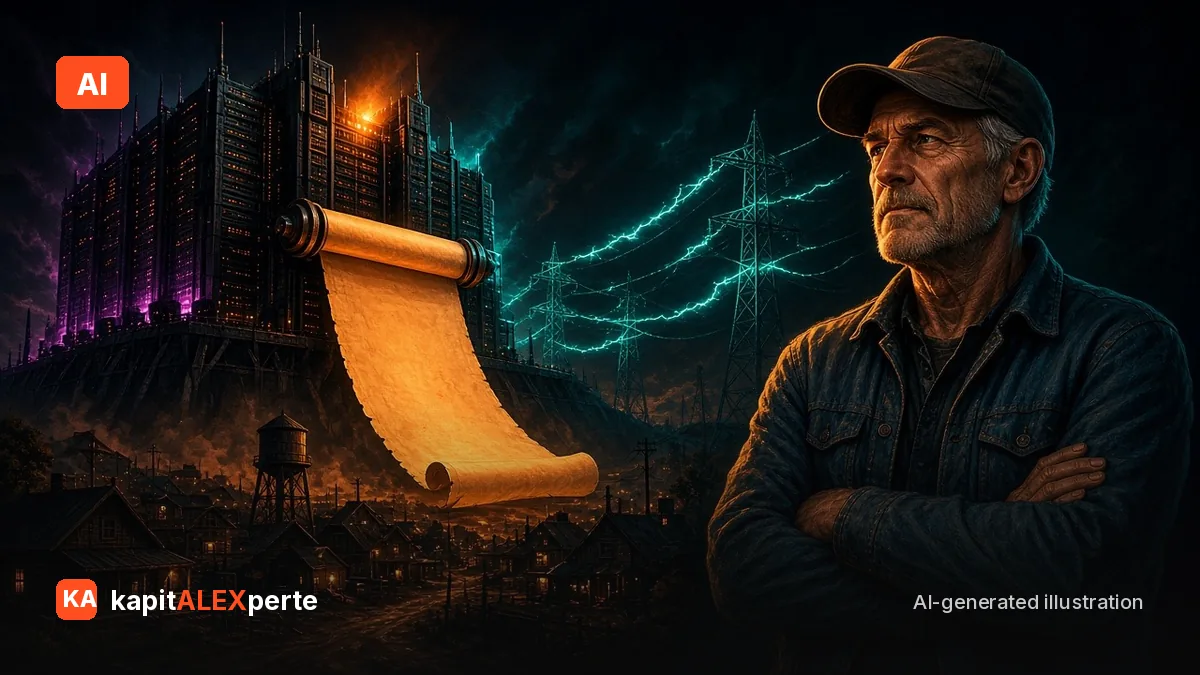
Voters said no to data centers. OpenAI answered with a rulebook. On Nov. 5, 2026, OpenAI published a National Community Compact and a Compute Campus Policy Blueprint, promising that every future compute campus it owns and operates will come with a local compact, public reporting and no non-disclosure agreements with public officials.
The timing is not subtle. In the Nov. 3 midterms, voters backed restrictions or rejected pro-development measures in all but one of 41 local ballot measures across 10 states, according to an analysis by Ballotpedia and results gathered by CNBC. We covered the Ohio data center bans on Nov. 4.
What OpenAI is promising
- Power: "We'll pay the full cost of the electricity we use and the infrastructure needed to serve us," OpenAI writes, with financial assurances "so other customers are protected if a project is delayed, reduced, or canceled."
- Transparency: a water plan per campus, published site-level water and electricity use, construction plans and independent noise studies before operations and annually afterward.
- NDAs: no NDAs with public officials, apart from narrow protections for security information, trade secrets or competitively sensitive data.
- Jobs: published hiring expectations and annual reporting on hiring and apprenticeships.
From promises to proposed laws
The blueprint goes further than voluntary pledges. It asks state utility commissions to require large electricity customers to cover the grid costs they add, and calls for public terms on tax incentives with a way to recover benefits if a developer falls short. OpenAI cites its planned Effingham County, Georgia campus, where Georgia Power can cut delivered power by up to 1,000 megawatts during peak demand.
"What we're doing with this blueprint is really laying out the best lessons that we have learned and committing to applying them as they go forward," Chief Global Affairs Officer Chris Lehane told reporters, according to CNBC. CNBC also notes that OpenAI told investors in February it is targeting $600 billion in total compute spend by 2030, and that Meta, Microsoft, Google and Anthropic have outlined similar commitments.
What it means for Web3 and AI teams – Analysis
The license to operate is now a cost line. When a company planning hundreds of billions in compute spend offers to pay its own grid costs and give up NDAs, it signals that local politics, not chips, may be the tightest constraint on AI infrastructure. The interesting part is the call for regulation: rules that every builder must follow tend to favor the players with the deepest balance sheets. Watch whether utility commissions adopt the cost-allocation idea, and whether the pledge reaches campuses OpenAI leases rather than owns. This is not investment advice.
FAQ
What did OpenAI announce on Nov. 5, 2026?
A National Community Compact for future compute campuses it owns and operates, and a Compute Campus Policy Blueprint with proposals for lawmakers.
Will OpenAI pay for the power its data centers use?
OpenAI says it will pay the full cost of the electricity it uses and the infrastructure needed to serve it, and provide financial assurances if a project is delayed, reduced or canceled.
Does the compact cover all OpenAI data centers?
OpenAI says the commitments apply to future compute campuses that it owns and operates.
Why now?
CNBC reports that voters backed restrictions or rejected pro-development measures in all but one of 41 local data center ballot measures across 10 states in the Nov. 3, 2026 midterms.
Sources
News summary based on the sources above. Not investment, legal or tax advice. Editorial policy & corrections · Report an error
Building in Web3? Turn the news into trust.
Positioning, KOL programs, LinkedIn systems and claim-safe content for Web3 and fintech teams.
Related
OpenAI launches GPT-6 Cyber, its first 'Critical' cyber model, for vetted red teams only
The model scores 48.5% on ExploitGym, found 81 high-severity Firefox bugs and, OpenAI says, stayed in scope in 99.93% of honeypot tests. Access is limited to approved Daybreak Red customers.
OpenAI buys Pierre, Meta buys Conductor: big labs absorb AI coding tools in one day
Both deals were announced on Nov. 4, 2026. Pierre's Code Storage will fold into Codex; Conductor stops sign-ups and deletes cloud data from Nov. 20, 2026.
OpenAI's cyber pipeline produced 948 Linux root exploits in one run for $1.2 million in API costs
In mid-October 2026 the company says agents reproduced 1,724 vulnerabilities and built working local privilege-escalation proofs for a stock Linux desktop — then generated patches for maintainers.